
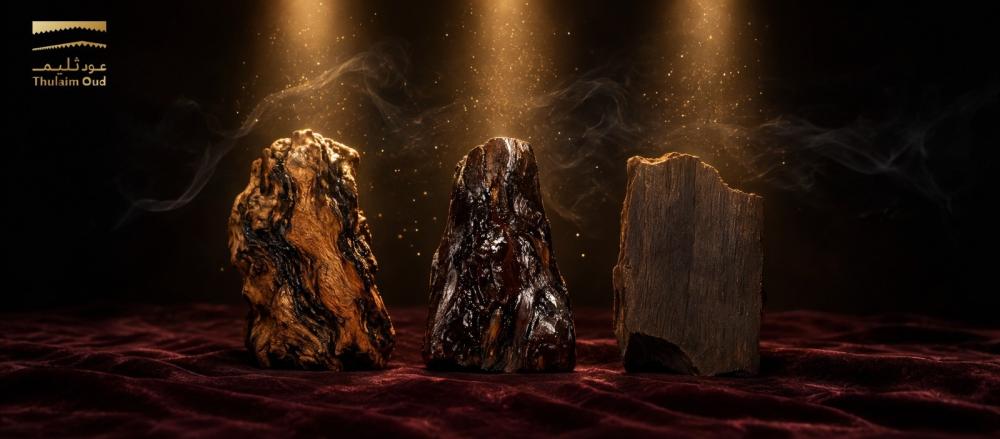

Understanding natural vs enhanced oud is the first step before any purchase. It also helps to know how both differ from synthetic oud, because that defines what you really pay for. Many buyers pay natural-oud prices for wood treated with oil. Others mistake synthetic oud for the real thing, because it is cheap and smells strong for the first minute. This comparison puts all three side by side, plainly and without hype, so you can choose with your eyes open.
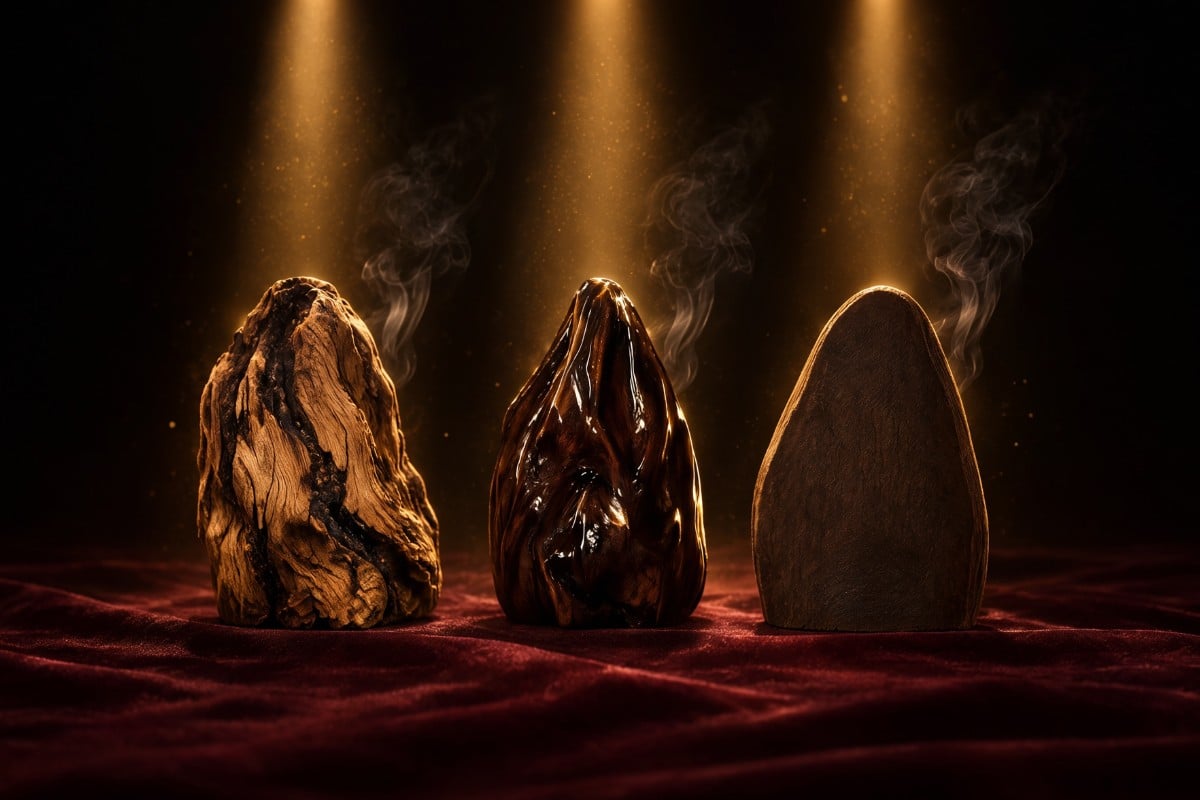
The incense burner is the real test that reveals the nature of every piece — Source: Pexels
◈ The full comparison table
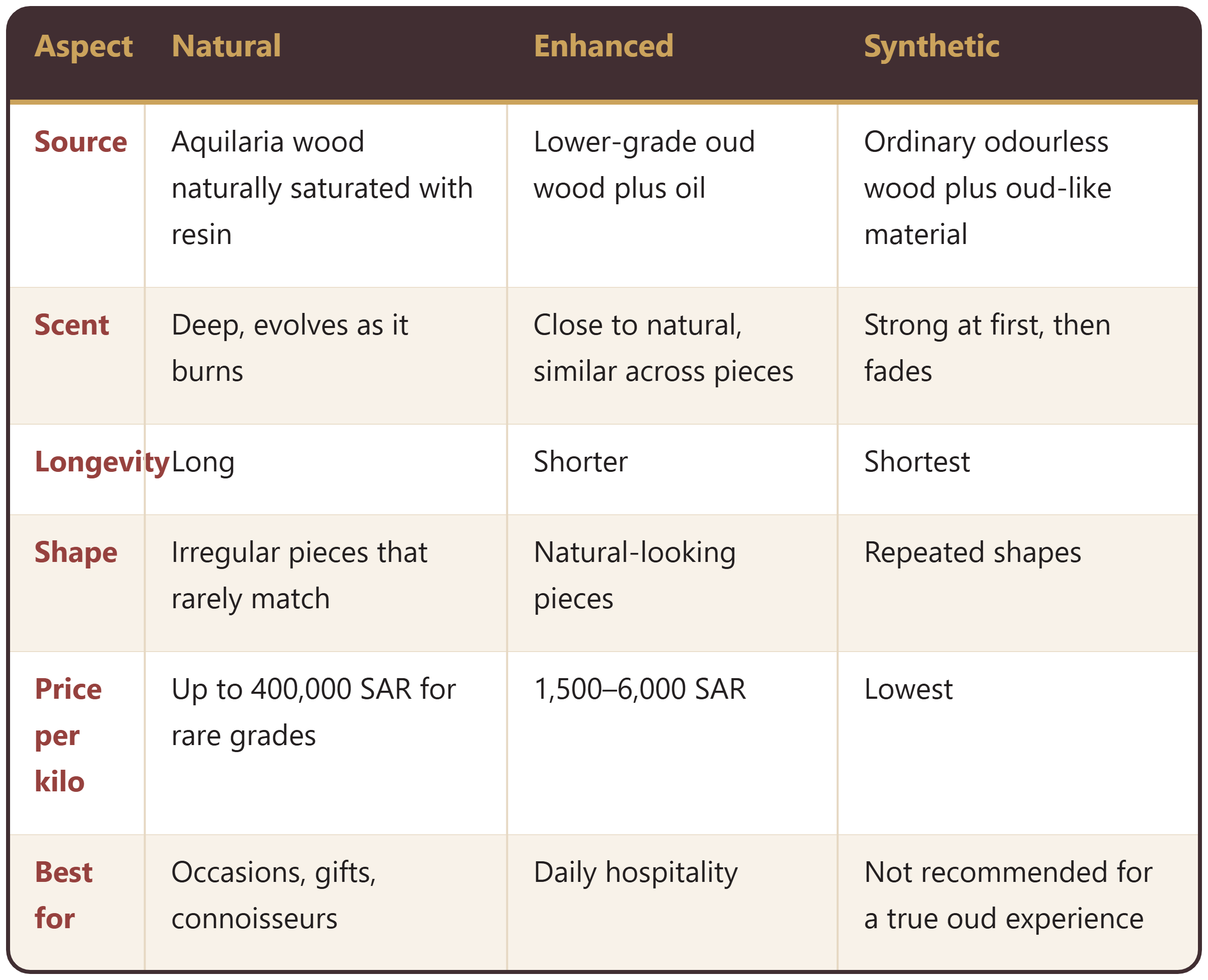
Prices come from a 2023 Al Eqtisadiah report on Riyadh's Al-Zal market. They are broad ranges that move with origin, grade and season.
◈ Genuine oud: value built over years
Natural oud has nothing added. When an Aquilaria tree suffers a wound or infection, it produces an aromatic resin. That resin builds up slowly inside the wood over many years, and more resin means higher value. So its scent moves from opening to heart to base on the charcoal, like a story told in the majlis. It also lingers in the room and on clothes. Because each piece formed in its own way, you rarely find two that match in shape or colour.
◈ Enhanced oud: real wood, enriched with oil
"Enhanced" is an established market term in Saudi and Gulf oud shops. It describes real oud wood with light resin that a trader treats with oud oil or aromatic oils. So it is not pure natural oud, and it is not synthetic either. It is a practical, honest choice as long as the seller uses its real name. Its quality depends on two things: the original wood and the oil. Here lies the heart of natural vs enhanced oud. One carries its scent in its own resin; the other gained part of it through treatment.
◈ Synthetic oud: a scent without the oud
Synthetic oud is not really oud. Factories coat ordinary wood with a material that mimics the smell of oud. They produce it in bulk, so its pieces repeat in shape. Even buyers with little experience can spot it. Look for repeated shapes and a clear difference in scent: it fades quickly and leaves a burnt-wood smell behind.
However, the problem with synthetic oud is not that it is cheap. The problem is that some sellers use names that suggest authenticity. If you want a pleasant scent on a tight budget, a good enhanced oud is a far more honest option. After all, it is genuine oud wood.
◈ How to tell real oud: the burner test
Place a small piece at the edge of settled charcoal and follow the scent for a full ten minutes:
- Natural: the scent changes and deepens, and stays in the room after the piece is spent.
- Enhanced: it holds one shallower note and may fade sooner.
- Synthetic: it starts strong, then vanishes into burnt-wood smell.
Before burning, look closely too. Pieces with almost identical shapes and sizes deserve a second look. Also, sticky or wet pieces may carry a heavy dose of added oil.
◈ Try it yourself: natural Qaroohills beside enhanced Moroki
The best way to learn the difference is to smell it. For example, take a piece of Qaroohills Jaar oud, a natural oud with nothing added. Then take a piece of Moroki enhanced oud and burn each one in its own burner. The natural piece unfolds slowly and changes character over the minutes. The enhanced piece, by contrast, gives a clear and steady scent from the start. Both have their place, yet one side-by-side test teaches more than a dozen articles.
◈ What about oud oil?
The same questions apply to oud oil. Distillers extract pure oil from oud wood, and a small amount of oil needs a great deal of wood. That is why stores sell it by the tola, about 12 grams, or by its fractions. Blended or perfumed oils may be cheaper and louder on the first sniff. However, they do not evolve on the skin the way pure oil does. The rule does not change: ask about type and origin, and never judge in the first minute.
◈ In the Saudi majlis, each type has its place
In Saudi gatherings, incense travels with Arabic coffee, sometimes many times in one evening. That is why many homes keep two kinds. The first is an everyday oud to scent the house and greet visitors. The second is a fine natural piece for an honoured guest or for Eid morning. This is not stinginess; it is good judgement. A seasoned guest notices the difference and values a special scent. Once you grasp natural vs enhanced oud, you can build that balance at home with confidence, without overpaying.
◈ Warning signs when buying
- A "fine natural" price that sits close to enhanced prices; the gap between the two is wide in the market.
- Descriptions that rely on words like "royal" and "luxury" without stating type and origin.
- A harsh, sharp smell from the box before you even burn it.
- No clear return policy.
If two of these appear together, stop and ask before you pay.
◈ When to choose each
- A valued guest or formal occasion: natural.
- Daily home and office incense: enhanced.
- A large event with hundreds of guests: start with enhanced, then offer natural to senior guests.
- Gifts that express appreciation: natural oud or oud oil.
Knowing the difference does not make one type good and the other bad. It simply puts each in its rightful place.
◈ Why we insist on honest labels
Enhanced oud is not fraud in itself, but selling it as natural is. At Thulaim Oud (عود ثليم), we hand-select every piece and name its type in the title and description. We also keep natural and enhanced oud in separate categories. In addition, each product page shows a full refund guarantee, and the store is verified on the Saudi Business Platform. Our customers' trust is worth more to us than any single piece.
◈ Suggested Thulaim Oud products
- Qaroohills Jaar Oud Double Super High — natural Jaar oud in a double super high grade, with nothing added. It is the ideal natural counterpart to the enhanced Moroki, so you can test what rich wood offers.
- Pure Moroki Enhanced Oud Resin — clearly labelled as enhanced and ideal for daily hosting. Burn it beside the natural Qaroohills and let your nose judge.
◈ FAQ
What is the difference between natural and enhanced oud in short?
Natural oud has nothing added, and its scent comes from its own resin. Enhanced oud is light-resin oud wood that a trader treats with oil to boost its scent.
Can enhanced oud cost more than natural?
Occasionally, when the treated wood and oil are excellent and the natural grade is very weak. Still, fine natural oud generally costs far more.
How can I tell real oud?
Watch how the scent evolves on charcoal and look for variety in piece shapes. Also buy from a store that states type and origin clearly.
Is synthetic oud used in bakhoor blends?
Some moulded bakhoor relies on synthetic ingredients, so always read the label.
Which is better for daily use?
A good enhanced oud is a sensible daily choice. Keep natural oud for occasions and special guests.
No type is "best" for everyone. The best is what fits your use and budget, provided the seller is honest about it. Now that natural vs enhanced oud is clear, browse the natural and enhanced oud collections at Thulaim Oud, and use the code "Thulaim" for 10% off your first order. Enjoy fast free shipping across Saudi Arabia, same-day delivery in Riyadh and delivery within 24 hours elsewhere in the Kingdom. You can also pay in installments with Tabby and Tamara.